https://savekidsjapan.blogspot.com/ by Mari Takenouchi, a Japanese anti-nuclear & anti-war citizen journalist covered by Reporters without Borders in 2014, https://rsf.org/en/japanese-prosecutor-suspends-contempt-proceedings-against-journalist Twitter: @mariscontact, E-mail: mariscontact@gmail.com (My English/Chinese/Japanese book can be ordered by mail)
Japanese prosecutor suspends contempt proceedings against journalist
日本の検察官、ジャーナリストへの侮辱罪を起訴猶予
Published on Friday 30 May 2014.
2014年5月30日
Reporters Without Borders takes note of prosecutor Eiji Masuhara’s decision to suspend “criminal contempt” proceedings against freelance journalist Mari Takenouchi in connection with her coverage of the aftermath of the Fukushima Daiichi nuclear disaster.
The proceedings were initiated as a result of a complaint by Ryoko Ando, the head of an organization called Ethos, after Takenouchi tweeted that its efforts to get people to return to live in contaminated areas were an “experiment on human beings.”
“The decision to suspend the proceedings against the journalist Mari Takenouchi is obviously encouraging, but we persist in calling on the authorities to abandon them altogether and not just suspend them,” Reporters Without Borders secretary-general Christophe Deloire said.
The prosecutor urged Takenouchi to continue her work and even wished her “good luck” with it. Takenouchi told Reporters Without Borders that her goal now was to “save the children living in contaminated areas and suffering from thyroid cancer.”
Japan is ranked 59th out of 180 countries in the 2014 Reporters Without Borders press freedom index.
日本は2014年の国境なき記者団の自由の報道ランキングで180か国中59位である。
********
原子力村、福島事故から3年たっても独立系記者の口封じ
2014年3月11日
Reporters Without Borders deplores the climate of censorship and self-censorship that continues to prevail in discussion of nuclear energy in Japan three years after the disaster at the Fukushima Daiichi nuclear power plant, 250 km north of Tokyo.
In particular, Reporters Without Borders condemns the treatment of independent journalists and bloggers who are critical of the government and the nuclear energy lobby, dubbed the “nuclear village” by its detractors.
The latest example is a “criminal contempt” complaint against freelance journalist and blogger Mari Takenouchi for a tweet about a project by an NGO called Ethos for encouraging the population to keep living in areas contaminated with radioactivity, which she described as “human experiments.”
“The complaint brought against Mari Takenouchi is yet another example of the way groups linked to the nuclear energy lobby are trying to gag opposing views,” said Benjamin Ismaïl, the head of the Reporters Without Borders Asia-Pacific desk.
“By criticizing the programme to encourage inhabitants to keep living in still radioactive areas, this journalist is just documenting a legitimate and well-substantiated concern about the health risks linked to radiation. We urge the head of Ethos, Ryoko Ando, to withdraw her complaint against Takenouchi, which acts as a deterrent to all independent news providers.
“As we feared in 2012, the freedom to inform and be informed continues to be restricted by the ‘nuclear village’ and government, which are trying to control coverage of their handling of the aftermath of this disaster. Its long-term consequences are only now beginning to emerge and coverage of the health risks and public health issues is more important than ever.”
Ismaïl added: “However, those who try to draw attention to the continuing risks linked to radiation or who accuse of the government of being unprepared or even deliberately minimizing the risks are censored and harassed by the authorities and the nuclear power industry, which increasingly resembles a dark and untouchable mafia.”
Takenouchi, a freelance journalist who has a blog and has translated three books on nuclear radiation, was notified on 29 January by the police of Iwaki Minami, in Fukushima prefecture, that Ethos director Ryoko Ando (also known as Yoko Kamata) had brought a criminal contempt complaint against her in connection with the tweet.
After interrogating Takenouchi at her home for three hours on 13 February, the Fukushima police asked her to go to police headquarters the next day, when she was interrogated for another four hours. The findings of their investigation were sent on at the beginning of March to Fukushima’s chief prosecutor, who will then decide whether to prosecute her.
In her articles and in interviews for independent media, Takenouchi has accused the government of pursing a public relations policy that plays down the radiation health risk for people in contaminated areas.
She has written: “Ethos is a programme where residents including pregnant women and children are encouraged to keep living in contaminated areas through carrying out decontamination and radiation measurement, which most importantly resulted in sickness among the majority of children. This was conducted in Belarus and now is in Fukushima funded by pro-nuclear lobbies.”
She pointed out on 3 February that the Ethos programme’s launch had only been reported at the local level by national public TV broadcaster NHK and some local TV stations. To alert public opinion, she recently posted a video in which she describes the findings of her research, based mainly on material in the public domain, about radiation risks and the dangers that the Ethos programme poses for the youngest sector of the population.
This case recalls the libel suit that the head of a nuclear security systems company brought against freelance journalist Minoru Tanaka in 2012 in connection with his coverage of developments in the nuclear energy industry after the disaster. The suit was abandoned in August 2013.
Ever since the Fukushima-Daiichi disaster in 2011, freelance journalists and foreign news media trying to cover Japan’s nuclear energy industry have found their access to information being restricted.
Both Japanese and foreign reporters have described to Reporters Without Borders the various methods used by the authorities to prevent independent coverage of the disaster and its consequences.
They have been prevented from covering anti-nuclear demonstrations and have been threatened with criminal proceedings for entering the “red zone” declared around the plant. And they have even been interrogated and subjected to intimidation by the intelligence services.
Reporters Without Borders is previewing here a passage from the “Fukushima censored” video that will be posted on our website (www.rsf.org) soon.こちらには、近々ホームページに掲載する予定の、「情報統制された福島」という動画の一部を載せる。
Japan has fallen 22 places in the Reporters Without Borders press freedom index in the past two years, and is now ranked 59th out of 180 countries.国境なき記者団の自由な報道度合いの指標では、この2年で日本は22位落ちて、180か国のうち59位となっている。
The six-place fall of the past year is partly attributable to the Japanese Diet’s adoption of a special intelligence protection bill on 26 November that will allow the government to classify any sensitive information as a “state secret.”昨年の6位落ちは、国会が11月26日に、政府がセンシティブな情報を「国家機密」とできる「特定秘密保護法案」を採択したことによる。
Reporters Without Borders deplores the climate of censorship and self-censorship that continues to prevail in discussion of nuclear energy in Japan three years after the disaster at the Fukushima Daiichi nuclear power plant, 250 km north of Tokyo.
In particular, Reporters Without Borders condemns the treatment of independent journalists and bloggers who are critical of the government and the nuclear energy lobby, dubbed the “nuclear village” by its detractors.
The latest example is a “criminal contempt” complaint against freelance journalist and blogger Mari Takenouchi for a tweet about a project by an NGO called Ethos for encouraging the population to keep living in areas contaminated with radioactivity, which she described as “human experiments.”
“The complaint brought against Mari Takenouchi is yet another example of the way groups linked to the nuclear energy lobby are trying to gag opposing views,” said Benjamin Ismaïl, the head of the Reporters Without Borders Asia-Pacific desk.
“By criticizing the programme to encourage inhabitants to keep living in still radioactive areas, this journalist is just documenting a legitimate and well-substantiated concern about the health risks linked to radiation. We urge the head of Ethos, Ryoko Ando, to withdraw her complaint against Takenouchi, which acts as a deterrent to all independent news providers.
“As we feared in 2012, the freedom to inform and be informed continues to be restricted by the ‘nuclear village’ and government, which are trying to control coverage of their handling of the aftermath of this disaster. Its long-term consequences are only now beginning to emerge and coverage of the health risks and public health issues is more important than ever.”
Ismaïl added: “However, those who try to draw attention to the continuing risks linked to radiation or who accuse of the government of being unprepared or even deliberately minimizing the risks are censored and harassed by the authorities and the nuclear power industry, which increasingly resembles a dark and untouchable mafia.”
Takenouchi, a freelance journalist who has a blog and has translated three books on nuclear radiation, was notified on 29 January by the police of Iwaki Minami, in Fukushima prefecture, that Ethos director Ryoko Ando (also known as Yoko Kamata) had brought a criminal contempt complaint against her in connection with the tweet.
After interrogating Takenouchi at her home for three hours on 13 February, the Fukushima police asked her to go to police headquarters the next day, when she was interrogated for another four hours. The findings of their investigation were sent on at the beginning of March to Fukushima’s chief prosecutor, who will then decide whether to prosecute her.
In her articles and in interviews for independent media, Takenouchi has accused the government of pursing a public relations policy that plays down the radiation health risk for people in contaminated areas.
She has written: “Ethos is a programme where residents including pregnant women and children are encouraged to keep living in contaminated areas through carrying out decontamination and radiation measurement, which most importantly resulted in sickness among the majority of children. This was conducted in Belarus and now is in Fukushima funded by pro-nuclear lobbies.”
She pointed out on 3 February that the Ethos programme’s launch had only been reported at the local level by national public TV broadcaster NHK and some local TV stations. To alert public opinion, she recently posted a video in which she describes the findings of her research, based mainly on material in the public domain, about radiation risks and the dangers that the Ethos programme poses for the youngest sector of the population.
This case recalls the libel suit that the head of a nuclear security systems company brought against freelance journalist Minoru Tanaka in 2012 in connection with his coverage of developments in the nuclear energy industry after the disaster. The suit was abandoned in August 2013.
Ever since the Fukushima-Daiichi disaster in 2011, freelance journalists and foreign news media trying to cover Japan’s nuclear energy industry have found their access to information being restricted.
Both Japanese and foreign reporters have described to Reporters Without Borders the various methods used by the authorities to prevent independent coverage of the disaster and its consequences.
They have been prevented from covering anti-nuclear demonstrations and have been threatened with criminal proceedings for entering the “red zone” declared around the plant. And they have even been interrogated and subjected to intimidation by the intelligence services.
Reporters Without Borders is previewing here a passage from the “Fukushima censored” video that will be posted on our website (www.rsf.org) soon.
The six-place fall of the past year is partly attributable to the Japanese Diet’s adoption of a special intelligence protection bill on 26 November that will allow the government to classify any sensitive information as a “state secret.”
Reporters sans frontières déplore le climat de censure et d’autocensure qui continue de régner sur la question du nucléaire, trois ans après l’accident nucléaire à la centrale de Fukushima Daiichi (nord de Tokyo). L’organisation dénonce le traitement réservé aux journalistes et blogueurs indépendants et critiques à l’encontre des autorités et du lobby nucléaire, surnommés "village nucléaire" par leurs détracteurs. Dernier cas recensé par l’organisation, la journaliste freelance et blogueuse Mari Takenouchi, accusée d’"outrage criminel" après avoir critiqué l’organisation non gouvernementale " Ethos " et son projet de repeuplement volontaire des zones irradiées.
"La procédure judiciaire lancée contre Mari Takenouchi est un nouvel exemple de la manière dont certains groupes liés à des organismes pro-nucléaires cherchent à museler les voix contradictoires. En dénonçant le programme encourageant les habitants à rester dans des zones irradiées, la journaliste ne fait que documenter une inquiétude légitime, argumentée au regard des risques médicaux liés aux radiations. Nous demandons à la directrice de l’organisation Ethos, Mme Ryoko Ando, de retirer sa plainte à l’encontre de Mari Takenouchi, qui constitue un message dissuasif pour tous les acteurs indépendants de l’information", déclare Benjamin Ismaïl, responsable du bureau Asie-Pacifique de Reporters sans frontières.
"Comme nous le craignions en 2012, la liberté d’informer et de s’informer continue d’être mise à mal par le ’village nucléaire’ et les autorités, qui s’évertuent à contrôler l’information sur la gestion de ’ l’après-crise ’. Les conséquences de la catastrophe sur le long terme commencent à peine à émerger et les enjeux en matière d’information sur les risques sanitaires et la santé publique sont plus que jamais d’actualité. Mais ceux qui tentent d’attirer l’attention sur la permanence des risques liés aux radiations, de dénoncer le manque d’anticipation des autorités, voire leur politique de minimisation des risques, sont censurés et harcelés par ces dernières et les acteurs privés du secteur nucléaire qui, pris dans son ensemble, ressemble de plus en plus à une mafia opaque et intouchable", ajoute Benjamin Ismaïl.
Le 29 janvier 2014, Mari Takenouchi, journaliste freelance, auteure du blog savekidsjapan.blogspot.fr et traductrice de trois livres traitant des radiations nucléaires, a été informée par la police d’Iwaki Minami, à Fukushima, du dépôt d’une plainte à son encontre par la directrice de l’organisation Ethos, Ryoko Ando (des son vrai nom Yoko Kamata) pour diffamation pénale, suite à la publication d’un tweet dans lequel la journaliste aurait qualifié leur programme d’"expérience sur des êtres humains".
Le 13 février, la police de Fukushima a interrogé la journaliste à son domicile pendant près de trois heures, avant de la convoquer, le lendemain, au commissariat, où elle a de nouveau été entendue pendant quatre heures. Début mars, les informations recueillies ont été envoyées au procureur de Fukushima prochain. Ce dernier devrait ensuite décider de la continuation ou non de la procédure judiciaire à l’encontre de la journaliste.
Dans ses articles et interviews publiés par les médias indépendants, la journaliste dénonce une politique de communication menée par le gouvernement visant à minimiser les dangers posés par les radiations auprès des populations des zones contaminées. Pour la journaliste "Ethos est un programme par lequel les résidents, y compris les femmes enceintes et les enfants, sont encouragés à continuer à vivre dans les zones contaminées en participant à la décontamination et à la mesure des radiations, ce qui a entraîné des maladies chez la majorité des enfants concernés. Ce programme, conduit en Biélorussie et désormais lancé à Fukushima, est financé par les lobbies pro-nucléaires. "Le 3 février, Mari Takenouchi notait sur son blog que l’annonce du lancement du programme Ethos n’avait été relayée que par quelques chaînes locales et la chaîne de télévision nationale NHK, mais au niveau local seulement.
Afin d’avertir l’opinion publique, la journaliste a récemment mis en ligne une vidéo dans laquelle elle décrit l’état de ses recherches, notamment basées sur des sources publiques, sur les dangers liés aux radiations et les risques posés par le programme Ethos pour la frange la plus jeune de la population.
Cette affaire n’est pas sans rappeler la poursuite en justice à l’encontre du journaliste freelance Minoru Tanaka, accusé de diffamation par le président d’une entreprise de systèmes de sécurité pour centrale nucléaire, suite à ses enquêtes sur les coulisses de la gestion de l’incident nucléaire à la centrale de Fukushima-Daiichi. En aout 2013, les poursuites ont été abandonnées.
Depuis 2011, les journalistes freelance et les médias étrangers qui couvrent les sujets liés au nucléaire sont particulièrement visés par des restrictions dans l’accès à l’information. Parfois empêchés de couvrir les manifestations anti-nucléaires, menacés de procédures judiciaires pénales pour s’être rendus dans la " zone rouge ", interrogés et intimidés par les services de renseignement, plusieurs journalistes indépendants, japonais et étrangers, ont décrit à Reporters sans frontières les multiples entraves déployées par les autorités pour empêcher une couverture indépendante de l’accident nucléaire et de ses conséquences.
L’organisation dévoile ici un premier extrait du document vidéo " Fukushima censuré " qui sera prochainement mis en ligne sur www.rsf.org
En 2014, le pays a encore perdu six places, une chute s’expliquant en partie par l’adoption, le 26 novembre 2013, par la Diète d’un projet de loi sur la “protection des renseignements spéciaux” (special intelligence protection bill), donnant toute latitude au gouvernement pour qualifier de ‘secret d’État’ toute information qu’il jugerait trop sensible.
5月22日、竹野内へのエートス代表からの刑事告訴は取り下げられました。しかし、日本版エートスと言えるものはまだ本格始動しています。また、福島の子供たちの甲状腺がんと疑いは89名となっているのに、健康被害は認められず、国はいまだ原発を再稼働させようとしています。ぜひ、今後とも情報拡散をしていきましょう!! On May 22, the indictment against Takenouchi by ETHOS leader was dropped. However, Japan ETHOS has been in full swing! Prime Minister Abe does not admit any health hazards though there are as many as 89 thyroid cancer kids in Fukushima and the government is trying to restart nuclear power plants. Accordingly, let's keep disseminating information!
Save Kids Japan by Mari Takenouchi, Japanese Mom & Journalist
(English)
日本版エートス本格始動と竹野内真理、エートスから刑事告発
(日本語)
エートス問題、ICRP、ホールボディーカウンター、福島の子供たちのがんの転移の話など Mari Takenouchi, talking about ETHOS, whole body counter figures, Fukushima childrens' cancer metastasis 福島では、恐ろしいことに子供向けのがんセミナーが開かれようとしています。このようなこと、許されるのでしょうか?
In Fukushima, surprisingly, there will be a cancer seminar for kids. Do you think this can be forgivable?
Coinciding the criminal accusation against me by the Japanese ETHOS leader, Mr. Jack Rochard, French ETHOS leader who used to work for French Atomic Energy Comission, had concluded a memorandum with Fukushima Medical University! (Mr. Jack Rochard was using his title as Vice Chairman of ICRP)
Meanwhile, Japanese Reconstruction Agency embarked on the Japanese version of ETHOS as in below. (They say that if residents are more involved, they would become less skeptical...)
福島医大とICRPが事業協力で覚書締結 Memorandum between Fukushima Medical University and ICRP
仏原子力ロビー、エートス代表でICRP副委員長でもあるジャックロシャール氏の動画 Mr. Jack Rochard, the director of ETHOS and vice chairman of ICRP
福島県立医科大学と国際放射線防護委員会(ICRP)は19日、事業協力で覚書を締結した。福島から世界に発信されている情報は必ずしも正しいものばかりではないとして、福島医大とICRPとの関係をさらに発展させ、情報共有や発信などを強化する。 On February 19, 2014, Fukushima Medical University and International Committee on Radiological Protection (ICRP) concluded a memorandum to reinforce sharing and sending out information on Fukushima, which they say is not always correct, through enhanced relationship between the University and ICRP.
The memorandum is a stipulation of relationship of Fukushima Medical University and ICRP, which conducted symposiums in Fukushima through Dialogues, supported by the University.
ICRPが福島医大の関係者に対して、防護体系に関するアドバイスを提供するなどの協力を行う一方、福島医大は福島県民健康管理調査の結果を、ICRPのネットワークを使って情報発信し、国際的な理解を促進させたいとしている。 While ICRP is to cooperate by providing advice for radiation protection system, Fukushima Medical University will send out information of the Fukushima Prefecture Health Survey through ICRP network in order to enhance international understandings.
また、ICRPは、福島原発事故の経験をもとに、新たな防護体系の構築することも視野に入れる。
In addition, ICRP is eyeing on building a new radiological protection system based on the experience of Fukushima nuclear accident.
In the ceremony, Mr. Shinichi Kikuchi, the chief director/president of Fukushima Medical University, and Mr. Jack Rochard, the vice chairman of ICRP signed the memorandum. Mr. Masafumi Abe, the vice president/director of the Radiological Medicine Prefectural Health Management Center, and Special Prof. Otsura Niwa, the international liason of the Center were attending.
菊地理事長は「国際防護の世界的権威であるICRPのネットワークを活用し、世界と連携していきたい」と述べ、ロシャール副委員長は「福島の人々のために力を尽くす」と述べた。 The chief director Kikuchi said, "We would like to enhance international coordination using the network of ICRP, the global authority of international radiological protection."
In the press conference, questions such as what would change after the conclusion etc, and Mr. Jack Rochard answered, "There is no concrete plans as to what ICRP will do after the conclusion," adding that he wanted to build up new radiological protection system using the experience of Fukushima.
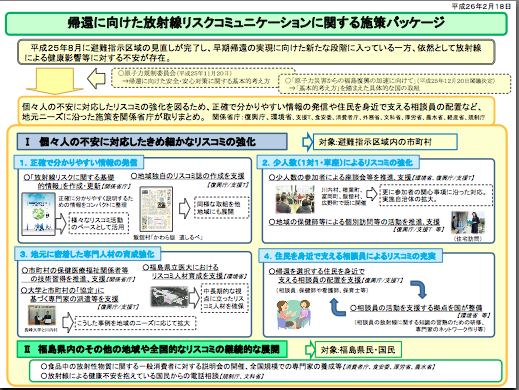
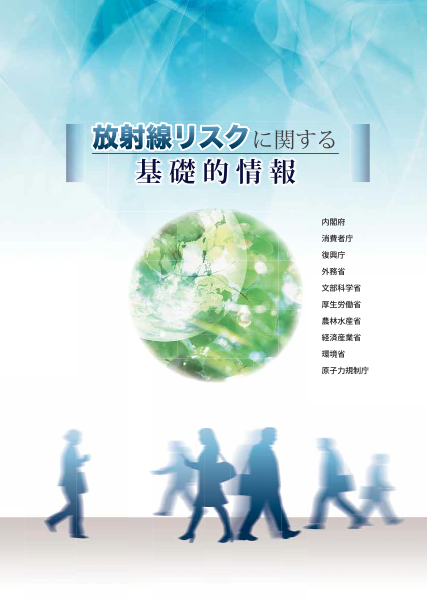
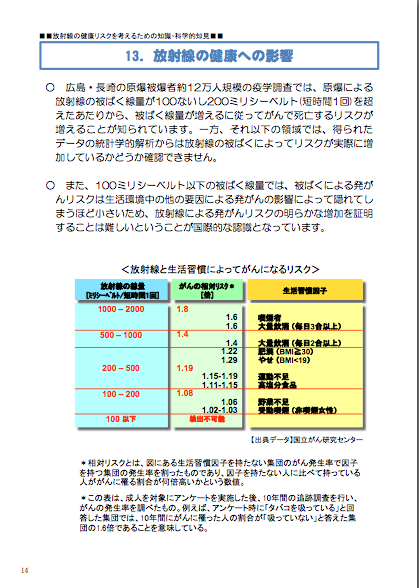
復興庁は18日、原発事故による健康影響への不安低減策として、「帰還に向けた放射線リスクコミュニーションに関する施策パッケージ」を公表。個々人の不安に対応するため、地元人材の活用し、車座や一対一の少人数によるリスク・コミュニケーションを強化する。 On February 18, the Reconstruction Agency announced "Package on Radiation Risk Communication Toward Return of Fukushima Residents." In order to cope with concerns of individuals, local human resource is to be utilized holding small meetings and person-to-person communication on radiation risk. この施策パッケージは、原発事故の旧警戒区域の避難解除に向け、住民の早期帰還を促進しようと、環境省と復興庁がまとめたもの。地元の住民が「依然として放射線による健康影響等に対する不安を抱えている」として、「国際的な知見や線量粋人に関する考え方を、分かりやすく伝える」ことが急務だとして、国が積極的に不安解消策に乗り出す。 This package was consolidated by Ministry of Environment and Reconstruction Agency to promote early return of residents. The government is now aggressively involved in erasing residents' anziety on health effects by radiation, by conveying international findings and ways of thinking on radiation doses. 同パッケージの取りまとめを行った復興庁の秀田智彦参事官は、国が表にでると「国の都合の良いように説明している」などと指摘する声があると紹介。地域にとけ込んでいる地元の方をリスクコミュニケーション人材として育成したいと述べた。 Mr. Tomohiko Hida, a counselor of Reconstruction Agency who conslidated the Package said, "There are voices saying, If the government comes forward, residents would think that the government is forcing residents some convenient explanations. Therefore, we would like to nurture human resources of risk communicators among local residents." また、チェルノブイリ原発事故後、EUがベラルーシの一部地域で実施した「エートス・プロジェクト」などを参考にした、車座などによる少人数のリスクコミュケーションを強化。「講義」形式ではなく、講師を囲んでの親密な対応を推進する。地域には相談拠点を設け、相談員も配置する。 The Agency also is going to fortify small number risk communications based on ETHOS project conducted in part of Belarus by EU. In stead of lecures, they are going to promote intimate communication with lecturer in circle. They will also provide counselling places with counselors. これらリスコミを進める際の手引書として、10の省庁が連携して「放射線リスクに関する基礎的情報」を作成。各自治体や相談員などに配布する。同手引書は、「100ミリシーベルト以下の被ばく線量では、被ばくによる発がんリスクは小さい」と説明。 As a hand book for their risk communication, they prepared, "Basic Information on Radiation Risk" by 10 Ministries. In the Handbook, it says, "The cancer risk by radiation exposure is small under 100mSv." 去年10月に国連科学委員会(UNSCEAR)が公表した「福島第一原発事故の放射性被ばくによる急性の健康影響はなく、また一般住民や大多数の原発従事者において、将来にも被ばくによる健康影響の増加が認められる見込みはない」との評価を引用している。 In October 2013, UNSCEAR announced, "There has never been any acute health hazards by radiation after the nuclear accident, and there is no prospective of increase of health effects among local residents and most nuclear workers in the future," which was cited in this handbook. 巻末には、この手引書にアドバイスを寄せた専門家の名前がずらりと並び、その数は54人にのぼる。同手引書は初回3000部を印刷すものの、基本的にはインターネット上に公開し、情報が更新される度に内容を見直すことにしている。 In the end of the Handbook, 54 names of experts are listed. 3000 copies of the Handbook is to be printed initially, but it will be on the internet and will be updated. これらの施策について、記者からは「100ミリ以下はがんは増えないというのは政府の見解か」「リスク・コニュケーションを強化することによって、かえって政府への不信を高めるのではないか」など質問が殺到。 On these measures, there are countless questions such as, "Isn't it a government opinion that there will be no increase of cancer under 100mSv?" "Don't you think residents would be more skeptical against the government by fortifying the risk communication?" 福島県の地元紙記者は声を荒げながら、「これによって、被ばくを我慢しろというのか」「健康への不安を抱えて生きるのはバカだと言いたいのか」「福島県に放射性物質が降ったという環境に置かれている現状をどう説明するのか」と厳しく追及した。 Some Fukushima local reporters yelled, "Are you saying that Fukushima residents should put up with radiation exposure?" "Are you calling residents as idiot if they fear about health effects?" "How do you explain about the situation in Fukushima with fallout from nuclear power plants?" 政府は、旧警戒区域の避難解除に向け、福島県に対し新たに512億円(平成25年度補正)、1087億6100万円の「福島再生加速化交付金」を積み増す。この一部なども、相談員の配置など新規のリスク・コミュニケーション対策に充てられる。対象地域は、避難指示を受けた12市町村が中心。それぞれの回数や規模、人数など詳細の検討はこれからだとしている。 The government has provided additional 51.2 billion yen (supplementary budget) for lifting the evacuation zones and 108.761 billion yen for "Subsidy for Accelerating Fukushima Reconstruction." Part of them will be used for allocating counselors and holding new risk communication measures. The areas in subject are mainly 12 municipalities, where the evacuation has been ordered. Reference materials (Japanese) 「帰還に向けた放射線リスクコミュニケーションに関する施策パッケージ」 http://www.reconstruction.go.jp/topics/main-cat1/sub-cat1-1/201402171759... 「放射線リスクに関する基礎的情報」 http://www.reconstruction.go.jp/topics/main-cat1/sub-cat1-1/20140218_bas...
Reporters without Boarders criticized the criminal accusation by ETHOS to freelance journalist Mari Takenouchi and also criticised the Japanese prosecutor's judgement, "deferred indictment." The following is their article.
Japanese prosecutor suspends contempt proceedings against journalist
日本の検察官、ジャーナリストへの侮辱罪を起訴猶予
Published on Friday 30 May 2014.
2014年5月30日
Reporters Without Borders takes note of prosecutor Eiji Masuhara’s decision to suspend “criminal contempt” proceedings against freelance journalist Mari Takenouchi in connection with her coverage of the aftermath of the Fukushima Daiichi nuclear disaster.
The proceedings were initiated as a result of a complaint by Ryoko Ando, the head of an organization called Ethos, after Takenouchi tweeted that its efforts to get people to return to live in contaminated areas were an “experiment on human beings.”
“The decision to suspend the proceedings against the journalist Mari Takenouchi is obviously encouraging, but we persist in calling on the authorities to abandon them altogether and not just suspend them,” Reporters Without Borders secretary-general Christophe Deloire said.
The prosecutor urged Takenouchi to continue her work and even wished her “good luck” with it. Takenouchi told Reporters Without Borders that her goal now was to “save the children living in contaminated areas and suffering from thyroid cancer.”
Japan is ranked 59th out of 180 countries in the 2014 Reporters Without Borders press freedom index.
日本は2014年の国境なき記者団の自由の報道ランキングで180か国中59位である。
********
2014年5月22日、エートス代表安東量子氏による竹野内真理の刑事告訴を不起訴にすると決定すると、福島地方検察庁の増原検事からお電話がありました。 On May 22, 2014, the Fukushima prosecutor called Takenouchi to tell that he will NOT INDICT Mari Takenouchi under criminal accusation by ETHOS leader, Ms.Ryoko Ando! この事件を拡散し、またサポートして下さった皆様、本当にありがとうございました! Thank you all who have helped disseminating my story!! ただし、その後、安東量子氏が私を犯罪者と見做し、非常に侮辱するまとめを書いていたので、検察官に翌日聞いたところ、「起訴猶予」という事でした。安東氏と同じ法律用語で言ってほしかったです。私はこの決定に不満です。
However, Ms. Ryoko Ando was writing a contemptuous togetter regarding as a "criminal" under suspended indictment. I checked regarding this to the prosecutor and he said, "defer indictment." I am not satisfied with this decision and moreover, I wanted the prosecutor to use the same wording as the one toward Ms. Ando from the beginning. そして、この問題はまだスタート地点に立ったところです。 福島で89人もの甲状腺がんと疑いが出ているときに、安倍首相に健康被害がないことにされ、また大飯原発の再稼働差し止め判決が出ても、国が原発再稼働を進めようとしているからです。 Besides this, I consider this being at the starting point. PM Abe says "There is no health hazards" while there are 89 thyroid cancer and suspected cases among kids in Fukushima and the government of Japan still promotes restarting of nuclear power plants while Fukui local court ordered injunction of Ohi NPP.
私はエートス批判しだしてから、そして刑事告訴を受けてからさらなる嫌がらせを受け続ける中、国への質問状も書きました。子供の疎開問題や原発再稼働問題、原子力村の殺人まで入れています。ぜひ、皆様も拡散ください。そして国に心ある市民は、子供たちと将来のため、皆でこれらの問題を問いただす時だと思います。ぜひ拡散ください! http://koukaishitsumon.blogspot.jp/2014/04/blog-post.html Since I started criticizing ETHOS, I have been harrassed by countless number of people, all the more after this criminal accusation case. So I wrote an open question to the Ministries of Japan, regarding this case, children's need to evacuate, restart of nuclear power plants, and also murder by nuclear lobbies. I think it is time for us to ask questions direclty to the government to protect our children and future. Please share the page below! http://koukaishitsumon.blogspot.jp/2014/04/blog-post.html 以下も拡散を!情報のみが私たちの命を守る武器です。 Please share the URLs below,too! Information is the only weapon to protect our lives!
89人の甲状腺がんと安倍首相 Prime Minister Abe and 89 thyroid cancer kids http://savekidsjapan.blogspot.jp/2013/09/dear-citizens-in-world-prime-minister.html
To understand ETHOS criminal accusation, please watch this video! Mari Takenouchi, a single mother under a criminal accusation!
私が被曝問題で最も尊敬しているバンダジェフスキー博士からも以下の嬉しいコメントが。 I got some encouraging messages from Dr. Bandazhevsky, whom I respect most in regard to radiation exposure issue. (博士の最新のコメントと5月5日発表の最新の論文はこちら His latest mail and his latest article dated on Mary 5 2014 is as follows. →http://takenouchimari.blogspot.jp/2014/05/httpchernobyl-today.html )
Thank you very much for your letter. I understand your condition and worry with you. Need to find the strength to continue the fight. I'll ask my friends from France and other countries to act your protection.
On January 28th, 2014, I received a telephone call from Iwaki Minami police office in Fukushima, noticing me that the leader of Fukushima ETHOS Ms. Ryoko Ando (real name is Yoko Kamata) filed a legal complaint against me. Mari Takenouchi@mariscontactのツイート 世紀の罪人2人に共通項→日本に原発導入した中曽根康弘「2011年の日本がこんなにくたびれているとは思わなかった。」 福島で人体実験エートスを主催する(御用)市民活動家、安東量子「戦後67年かけて辿り着いたのが、こんな世界とかや。」長崎の日にて Mari Takenouchi's tweet @mariscontact
Common points of the 2 criminals of the century:
Yasuhiro Nakasone who introduced nuclear power to Japan
"I've never thought that Japan 2011 could be so worn-out."
Ryoko Ando, government
sided citizen activist who leads ETHOS "What a world are we seeing 67
years after the war" (On the day of Nagasaki)
*エートスとは、汚染地帯で子供たちや妊婦を含める住民が自分たちで除染をしたり、線量を測ったりして工夫しながら住み続け、結局子供たちの大半が病気になってしまったのに、この一番大変な問題を無視され、チェルノブイリでも、そして今福島でも推し進められている原子力村を資金源としたプログラムです。 Ethos is a program where residents including pregnant women and children are encouraged to keep living in contaminated areas through carrying out decontamination and radiation measurement, which most importantly resulted in sickness among majority of children. This was condcted in Belarus and now is in Fukushima funded by pro-nuclear lobbies.
This could be a fight against the state power and international nuclear lobby, which could be prolonged.
I am going to hire a lawyer and your generous support will be appreciated.
My bank account RyukyuBank (serial No. 0187) Matsuo Branch (No. 301) Holder's name: Mari Takenouchi Ordinary Account 529695 ある弁護士さんからは、以下のコメントが。 I received a following comment from a lawyer. 「このケースは、憲法21条の言論の自由の侵害に当り、罪人という表現が強い点を除いては、無数の子供を守る正義の観点からの主義主張で、裁判になり話題になったら、相手側が不利になるだろう。逆にあなたが世間に広く訴える機会となる」 "This case comes under the violation of Article 21, Freedom of Speech. Except that the word "Criminal" was too strong, your word came from the sense of justice to protect countless number of children. If this case was indicted, it would be a chance for you to disseminate this issue to the society."
"Probably the reason why the accuser used "criminal contempt" in stead of ""defamation of character" is that the latter has the stipulation saying, "If the case is involved in public benefit, the accused shall not be punished." However, what you are supposed to do is the same in both case. You can explain that you are trying to prevent massive health damages among children in the future, which should be now and nobody has been doing this so far." また、私のツイッターフォロワーさんたちから、ありがたいコメントが続々と届いています。 Also, I appreciate various kind comments from my followers. 「訴訟による嫌がらせで言論を封鎖しようとする汚い手口を容認するということは、脱原発も脱被爆も諦めて、弱者を見殺しにする事を容認することに等しい。」 "To admit such dirty way of silencing someone's speech through legal harrassement means to admit helpless people to die by giving up nuclear phase out and protection from radiation exposure." 「母子避難の社会的弱者である竹野内さんに、権力側が嫌がらせする原発スワップ裁判に当たるのではないか?」 "Isn't this a case of SLAPP(strategic lawsuit against public participation), where powerful pro-nuke people harass the weak like Ms. Takenouchi, who is a single mother. "
「竹野内さんの発言は法律違反ではなく、公共の利害に関与するので、立件されたら闘うべき」 Ms. Takenouchi's statement is not against law, but is involved in public benefits, so if she is prosecuted, she should stand up and fight. 「福島の事実を広げる竹野内さんへの口封じだろうが、真実は打ち勝つだろう」 "An attempt to silence Ms. Takenouchi who disseminate facts about Fukushima. But truth will prevail." 「告訴によるエートスからの恫喝。竹野内さんを全面支持」"ETHOS Threat using criminal accusation against Ms. Takenouchi. I support her 100%" 「言論弾圧事件であり、言論の自由が侵されているゆゆしき事態」 "This is a case of suppression of free speech, which brings us grave concerns." 「秘密保護法の先駆け的兆候で危惧する。市民で情報共有し、竹野内さんを守ろう」 "It is truly worry some since this is the sign of coming Japan's Secrecy Act. We need to share this info and protect Ms. Takenouchi" ****************************************
エートス代表、安東量子(本名、鎌田陽子)
Ms. Ryoko Ando, the leader of Fukushima ETHOS
"It is important to establish your own standard of radiation safety to achieve your true sense of security."
↑ I really do not understand what she has been saying. Please relocate children from Fukushima! It is dangerous to live there. The truth is as simple as this!
Professor Ban Nobuhiko, an expert of leukemia, who talked about this allegation of criminal charge is the director and board member of Health Physics Society in Japan. (Please see the end of this page)
I once participated in an event by Health Physics Society and asked, "Isn't there any increase of leukemia after Chernobyl?" and a member answered, "Since Russian kids have fair skin, people say that there are leukemia children after Cheronobyl."
************************ 侮辱罪に相当するというツイートは以下です。
Ms. Kamata insists that my following tweet is the subject to "criminal contempt."
Mari Takenouchi@mariscontactのツイート 世紀の罪人2人に共通項→日本に原発導入した中曽根康弘「2011年の日本がこんなにくたびれているとは思わなかった。」 福島で人体実験エートスを主催する(御用)市民活動家、安東量子「戦後67年かけて辿り着いたのが、こんな世界とかや。」長崎の日にて
Mari Takenouchi's tweet @mariscontact
Common points of the 2 criminals of the century:
Yasuhiro Nakasone who introduced nuclear power to Japan
"I've never thought that Japan 2011 could be so worn-out."
Ryoko Ando, government sided citizen activist who leads ETHOS "What a world are we seeing 67 years after the war" (On the day of Nagasaki)
On September 5, 2011, after the Fukushima nuclear accident, he stated the above in spite of the fact that he was the very person who introduced nuclear power to earthquake prone country like Japan.
Ms. Ryoko Ando read the above poem of her own on the Day of Nagasaki, in spite of the fact that she is the very person who diseminated false safety myth in Fukushima to encourage people to keep living in contaminated zones.
I thought these two have something in common. Though they themselves have been involved in, nuclear power introduction to Japan (Mr. Nakasone) and scattering radiation safety myth in Fukushima resulting in more chidren's radiation exposure (Ms. Ando), they pretend that they do not know anything and they are one of the victims/observers who live in this unfortunate society.
I would like to appologize regarding the expression of "criminals of the century" to both Ms. Kamata and Mr. Nakasone. At the same time, I would like both of them to reflect themselves what they have done.
I used the word "criminal of the century" due to my long time resentment seeing that nobody has taken true responsibility after the nuclear accident while lots of children are left being exposed to radiation.
In addition, I had a slight hope that both Ms. Ando and Mr. Nakasone whom I criticized would rethink what they have done and reconsider the situation of children who have been exposed to radiation.
I truly hope that the dissemination of this case could contribute to form the public opinion to make the government to relocate children in contaminated areas with responsible manner.
In addition, those responsible for the accident should be brought to justice in order to avert the same kind of tragedy.
**********************************
東京新聞もエートスを報道! Tokyo Newspaper Reported ETHOS on January 1, 2014 "ETHOS Meetings Backed by Pro-Nuke Funds" "Prevailing Grassroots Radiation Safety Myth" "Inviting ETHOS Missionaries from Overseas"
以下が2013年初頭に書いた、私のエートスの説明です。 The following is my explanation of ETHOS. ベラルーシでもエートス導入で活躍した元IAEA、現在ICRPそして仏のAREVA社から自らの団体CEPNの資金援助を受けている経済学者のジャック・ロシャール氏。 福島のエートスリーダー安藤量子氏(なぜか偽名で本名は鎌田陽子)に20mSv/yearはグッドニュースと言い、母親には科学はわからないだろう(とても失礼)、20Bq/kgなら大丈夫だと福島の人を説得。 結果、ベラルーシ汚染地帯では、健康な子供が2割を切る悲惨な状態になった。 ちなみにNHKはNHK福島のみでエートス関連の番組を宣伝のような形で放送している。 Mr. Jack Rochard, an economist and former member of IAEA and member of ICRP and CEPN founded by pro-nuclear organization such as AREVA. He wrote "20mSv/year is a good news" and said, "Mothers do not understand science (I am a mother, too, how rude!), and food upto 20Bq/kg is OK in Fukushima." In Belarus contaminated areas, due to ETHOS program lead by Mr. Lochard, less than 20% of kids stayed healthy in the contaminated areas after the program. ETHOS Fukushima program was aired by NHK only in Fukushima and not in nationwide. エートスの活動はICRP(国際放射線防護委員会)を根拠として、セミナーなどを共同開催している。 ETHOS radiation safety myth is based on ICRP and they hold seminars locally. ICRPの放射線防護の理論は、原子力推進のためのアリバイ根拠づくりのような物で、本当に人々を放射線から守るためのものではありません。以下に問題を列記してあります。 The theory of radiation protection of ICRP seems to be a alibi making to promote nuclear power. They do not seem to really protect the public from radiation. I put their problem as in the following. ICRP が間違っている5つの理由→http://savekidsjapan.blogspot.jp/2013/01/blog-post_4503.html
ICRP had talks with Fukushima residents on food safety Jacque Rochard: "It is important to establish a society where residents themselves can measure radioactive materials and exchange information...Mothers would not understand science...20Bq/kg is good enough..."
Fukushima Ethos (http://ethos-fukushima.blogspot.jp/) , in which residents are encouraged to live resourcefully in contaminated areas, is a dangerous program. This program seems to be solely taking an advantage of Fukushima residents who do not want to be relocated and at the same time, sacrificing health of the residents, especially children.
In ETHOS Belarus, experts advised people to voluntarily measure radiation to reduce radiation levels, and they saw some success.Also doctors cooperated measuring residents’ internal exposure using whole body counters (WBC) and recorded some decrease in their bodies.
However, while these figures were measured and recorded for studies of this program, the number of children with ill-health increased dramatically, sometimes more than 10 times, after years in Belarus.As for this issue, former WHO advisor Michel Fernex explained in the following video, which is strongly recommend. http://www.youtube.com/watch?v=2_oKtjnh52c&feature=yout...
エートスプロジェクトとは何か?(フランス語+日本語字幕)
What is ETHOS project? (French with Japanese subtitle)
Original title: Controversies nucléaires by Wladimir Tchertkoff
with English and Chinese subtitles (Amazingly, the one with Japanese subtitles was deleted! 驚くべきことに日本語字幕版は、削除されてしまいました!)
Also, in the following film I have been watching many times, there are a number of conscience scientists and scientists who try to cover up health hazards of radiation exposed children. The fact that WHO is in collaboration with IAEA, nuclear promoting organization is also depicted.I would like this film to be watched by citizens in the world.
As for Mr. Jack Lochard and Mr. Terry Schneider, he reported on ETHOS Belarus (1996-1998) in Hiroshima in 2000 http://www.irpa.net/irpa10/pdf/E11.pdf.In page 9, the report said, “A daily intake of 50 Bq (corresponding to an annual budget of about 20000 Bq and an annual dose of about 0.2 mSv) was retained as the target value of 300 Bq per day (100000 Bq and 1.3 mSv per year) as the frontier beyondwhich it was not recommended to go.”
Why didn’t he give warning to Japanese government when they set the food regulation as 500Bq/kg in 2011 when he visited Japan?Also, why doesn’t he give warning to the current 100Bq/kg in Japan, which is way too high considering their recommended 50Bq/day, since adults consume more than 2kg of food/drinks.
In addition, on page 11 of the report, “From medical point of view it will bedifficult to see improvements, if any, before a few years, taking for granted that mothers will maintain their vigilance.However, it is interesting to mention that during the three years a profound change with regard to radiological protection took place and several interesting lessons can be drawn.”By reading this, we can see that ETHOS project does not concentrate on human health, which is supposed to be the top priority more than anything else.
As a matter of fact, Mr. Lochard was involved in the IAEA Chernobyl Project in 1990-1991, which concluded that there was no direct health damages observed caused by radiation. http://www-pub.iaea.org/MTCD/publications/PDF/Pub894_web.pdf
Mr. Jacque Lochard is an economist.He conducted cost benefit analysis on the evaluation for relocation in this IAEA Chernobyl Project.While the former Soviet Union scholars demanded the residents relocation above 1mSv/year, and experts from ICRP and WHO for above 5mSv/yr, Mr. Lochard insisted that it could be up to 100mSv considering the cost.Since Mr. Lochard suggested such an unbelievable figure, scientists made the compromise to 5mSv.In his report, there was no mentioning about children and pregnant women.
Mr. Lochard has been visiting Fukushima for promoting ETHOS Fukushima along with the Japanese counterpart, Ms. Ryoko Ando, the director of ETHOS Fukushima, another NGO.In November 2011, before the startup of Fukushima ETHOS, Japanese government held a meeting at the Cabinet Office inviting Mr. Lochard.
Mr. Lochard sent a letter to Ms. Ryoko Ando, the director of Fukushima ETHOS and he said, “The decision about the 20 mSv is a good news. This will allow many people to return to their home soon. “http://ethos-fukushima.blogspot.jp/2012_01_01_archive.html
However, when the Japanese government came up with 20mSv relocation standard, countless number of Japanese mothers opposed to it and gathered around the Ministry of Education, Culture, Sports, Science and Technology.However, the Japanese government totally ignored these voices.
In this way, the same people from ETHOS project have been working both in Chernobyl and in Fukushima.While they try to appear to be helping those who cannot relocate by themselves under NGO organization CEPN (the members are French EDF, IRSN, CEA, AREVA ), in reality, this program has been backed up by international nuclear lobby such as IAEA, ICRP, UNSCEAR , IRPA and nuclear power states including Japan!
In Chernobyl already, millions of residents and children have been suffering.And now in Japan, health damages have been observed including the increase of death rate.This is the world scandal of the centuries and I would like to let the citizens of the world to be aware of this horrendous facts.
It is a criminal acts of Japanese and overseas scholar to downplay the risk of radiation, which consequently lead to a number of residents’ health hazards both in Chernobyl and in Fukushima.I believe these facts should be known to the world and eventually, those responsible should be referred to the International Criminal Court. エートスの重要人物;伴信彦東京医療保健大学教授(白血病が専門) Important person in ETHOS: Professor Nobuhiko Ban, Tokyo Health Medical University (a leukemia expert)
Professor Ban (left) and Mr. Gonzalez (right) この伴信彦教授ですが、インターネット上で@buveryのニックネームで以前から、ずっと私(竹野内真理)はデマリンと呼ばれ続けています。私はフリーランスで被曝問題の翻訳をやっており3冊の海外の本も出版、福島事故後から「汚染地帯の子供たちは逃がすべきである」と警告を発信しているのですが、伴信彦教授は私のことをデマリンと誹謗中傷し、信頼性を傷つけようとしています。(問題その1)
伴教授のマナーが「教授」という肩書にふさわしくないのは明らかであり、私は東京医療保健大学に7月5日に公開質問状を送りましたが、8月19日現在、何の返事もありません。 Under the name of @buvery, he also kept calling me, "DEMARIN" (coined word from Dema=demagogy + Mari=my first name) on twitter. I am a freelance journalist/translator who released three radiation exposured related books from overseas and I have been calling for children's evacuation since the Fukushima accident, and Professor Ban has been slandering me trying to degrade my credibility. His manner is clearly contrary to the one titled as the "Professor at Tokyo Healthcare University." I have written a open question letter to Tokyo Healthcare University, but I haven't received any reply as of today.(Jan 31, 2014)
同時に、このエートスの推進学者、伴信彦・東京医療保健大学教授が、実は「放射線による白血病の発症機構」という重大な論文を数年前に自ら書いていたことを知りました。それによれば、マウスを使った放射線の実験で、2番染色体上のSfpi1遺伝子が傷つき、同時に造血幹細胞が老化するという、遺伝子レベル、血液細胞レベルでの異変により、1~2年目くらいからマウスが白血病を発症するというメカニズムまでつきとめていたのです!!! The other day, I was truly shocked to find that Professor Nobuhiko Ban from Tokyo Healthcare University had written on the mechanism of developing leukemia by radiation some years ago. According to his papers, he had already found that radiation damages the gene Sfpi1 on chromosome No. 2 and promotes the aging process of hematopoietic stem cells, thus mouse could develop leukemia only after 1 or 2 years after irradiation!! 伴信彦氏の論文→ http://www.oita-nhs.ac.jp/member/cat5_top/cat193/cat351/post_20.html Thesis written by Prof. Nobuhiko Ban http://www.labome.org/expert/japan/oita/ban/nobuhiko-ban-572788.html このようなすごい論文を自分で書いていながら、一方で汚染地帯に子供まで含んだ住民を居続けてよいものとするエートスを賛同する姿勢は倫理的に許されるものではないと思います。これは1の問題とは比較にならない、多くの住民の命と健康にかかわる問題です。 While, Professor Ban wrote a number of excelled thesis on radiation effects, he assistes ETHOS progam that allows even pregnant women and children to live in contaminated areas. I truly believe what he is doing is ethically wrong and this issue is a one of the most grave character which could affect the health and lives of many residents , uncomparable to the question No. 1. もうひとつ、東大の児玉龍彦教授が福島で行うべきとする、甲状腺がんの被曝原因を見分ける7q11遺伝子検査というのがあるのですが、この伴信彦教授はbuveryの日記でその可能性を否定しています。http://d.hatena.ne.jp/buvery/20120112 福島の子供たちの甲状腺がんの多発が、被曝由来であることをなんとか隠そうとしているように思えます。 One more important thing to add. Prof. Ban is denying the possibility of finding the causal relationship of radiation and child thyroid cancer that has been increasing in Fukushima, namely, 7q11 gene band inspection. It seems that Prof. Ban is trying to hide the possibility that Fukushima children developed thyrod cancer caused by radiation. 本来であれば、7q11遺伝子検査は早急に行われ、福島の子供たちの非難を即すべきだと思います。 7q11 gene test should be conducted immediately and early relocation of Fukushima children should be conducted. http://savekidsjapan.blogspot.jp/2013/09/a-fukushima-teenager-found-to-have-lung.html 最も憂慮されるのが、白血病がすでに福島その他で出始めているという点です。 My top concern is that there is an emergence of leukemia in Fukushima and other areas in East Japan. http://savekidsjapan.blogspot.jp/2014/01/blog-post.html 私はこのブログを書いたら、今まで信頼していた市民活動家まで、出さないようにと言われました。 When I wrote the above blog, a citizen activist I have been trusted even tried to stop me. (残念ですが、権力側の人でこちら側のふりをして入り込んでいる人はたくさんいるのです。) (To my regret, there are many infiltrated people in the citizen side, too) 今回の私の刑事告発も、白血病が増加している中、なんとか私の口封じをしようとしているのではないかと思いました。 I thought, the criminal accusation against me was made in order to silence me when leukemia came to emerge in contaminated areas.
*その後、刑事さんとの取調べの中で、人体実験エートスという単語が告訴の対象と判明しました。
しかし、私はこの人体実験と言う言葉はその通りだと思っているので、撤回するつもりはありません。


 Print
Print Send
Send
 Imprimer
 envoyer